


26/10/2026
HMRC Urges Early Self Assessment Filings
HM Revenue and Customs (HMRC) is encouraging millions of taxpayers to file early rather than wait for the January rush.
The filing deadline for online Self Assessment tax returns for the 2025 to 2026 tax year is 31 January 2027, with around 12 million people expected to submit a return. Filing sooner lets customers find out what they owe ahead of time, plan their budgets, receive any refunds more quickly if they have overpaid, and avoid penalties.
Returns can be completed and filed via GOV.UK, where an online checker helps people confirm if they need to submit a Self Assessment return. Those new to Self Assessment must register first to obtain their Unique Taxpayer Reference (UTR). Anyone who no longer needs to file can notify HMRC through GOV.UK.
Myrtle Lloyd, HMRC's Chief Customer Officer, said: "The Self Assessment deadline is 100 days away so now is the ideal time to get ahead and file your tax return early.
"Guidance and support are available on GOV.UK to help you file your tax return. Just search 'file my Self Assessment' on GOV.UK to start yours today."
Comprehensive guidance is available on GOV.UK, including step-by-step help with individual sections of the return, explanatory videos, and HMRC's digital assistant for common questions. Customers can also seek help from a tax agent, a trusted friend or family member, or a voluntary organisation.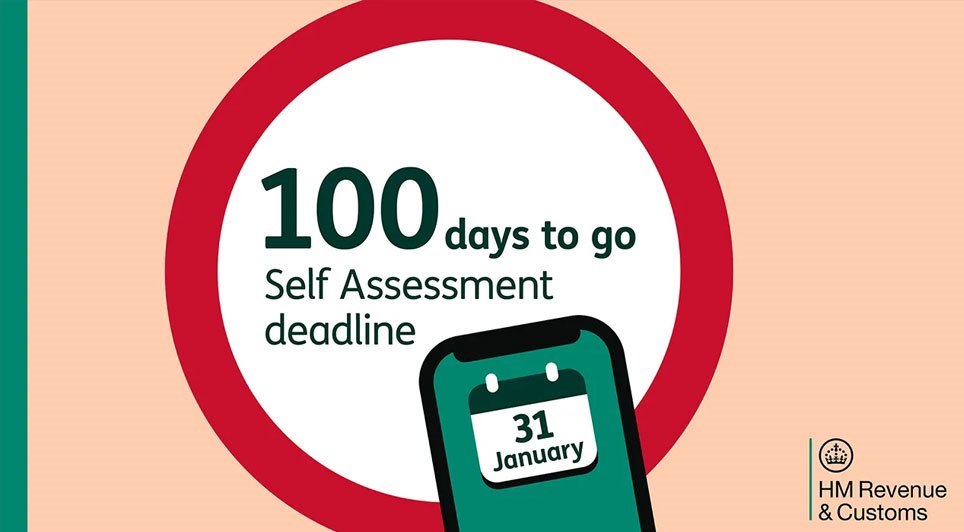 Those signed up to Making Tax Digital for Income Tax must still complete their Self Assessment return in the usual way and pay any tax due by 31 January 2027. Customers with PAYE income who file online by 30 December can choose to have any tax owed collected through their tax code.
HMRC is also warning about scams. Criminals often pose as HMRC to steal money or personal information. People should pause and check whether a request is genuine before sharing details, never click on unexpected links, and never disclose HMRC sign-in credentials. Genuine HMRC contact details and advice on spotting scams are on GOV.UK by searching 'HMRC phishing and scams'.
The deadline for paper returns for the 2025 to 2026 tax year is 31 October 2026.
Customers who received the 2025 Winter Fuel Payment (or the Pension Age Winter Heating Payment in Scotland) and are in Self Assessment will see the payment prepopulated in their 2025 to 2026 online return where possible, with payment due by 31 January 2027. If it is not shown, it should be added manually; paper filers must include it themselves. Those with total income over £35,000 will repay the amount through their Self Assessment bill.
For those who pay the High Income Child Benefit Charge (HICBC) via Self Assessment, around 300,000 customers will now have their or their partner's Child Benefit details prepopulated on their online return to help improve accuracy. Some may be able to pay the charge monthly via their salary using the PAYE digital service, which adjusts their tax code.
UK cryptoasset owners must pay Capital Gains Tax on gains above the £3,000 annual allowance and declare this in their 2025 to 2026 Self Assessment return.
The filing deadline for online Self Assessment tax returns for the 2025 to 2026 tax year is 31 January 2027, with around 12 million people expected to submit a return. Filing sooner lets customers find out what they owe ahead of time, plan their budgets, receive any refunds more quickly if they have overpaid, and avoid penalties.
Returns can be completed and filed via GOV.UK, where an online checker helps people confirm if they need to submit a Self Assessment return. Those new to Self Assessment must register first to obtain their Unique Taxpayer Reference (UTR). Anyone who no longer needs to file can notify HMRC through GOV.UK.
Myrtle Lloyd, HMRC's Chief Customer Officer, said: "The Self Assessment deadline is 100 days away so now is the ideal time to get ahead and file your tax return early.
"Guidance and support are available on GOV.UK to help you file your tax return. Just search 'file my Self Assessment' on GOV.UK to start yours today."
Comprehensive guidance is available on GOV.UK, including step-by-step help with individual sections of the return, explanatory videos, and HMRC's digital assistant for common questions. Customers can also seek help from a tax agent, a trusted friend or family member, or a voluntary organisation.
HMRC is also warning about scams. Criminals often pose as HMRC to steal money or personal information. People should pause and check whether a request is genuine before sharing details, never click on unexpected links, and never disclose HMRC sign-in credentials. Genuine HMRC contact details and advice on spotting scams are on GOV.UK by searching 'HMRC phishing and scams'.
The deadline for paper returns for the 2025 to 2026 tax year is 31 October 2026.
Customers who received the 2025 Winter Fuel Payment (or the Pension Age Winter Heating Payment in Scotland) and are in Self Assessment will see the payment prepopulated in their 2025 to 2026 online return where possible, with payment due by 31 January 2027. If it is not shown, it should be added manually; paper filers must include it themselves. Those with total income over £35,000 will repay the amount through their Self Assessment bill.
For those who pay the High Income Child Benefit Charge (HICBC) via Self Assessment, around 300,000 customers will now have their or their partner's Child Benefit details prepopulated on their online return to help improve accuracy. Some may be able to pay the charge monthly via their salary using the PAYE digital service, which adjusts their tax code.
UK cryptoasset owners must pay Capital Gains Tax on gains above the £3,000 annual allowance and declare this in their 2025 to 2026 Self Assessment return.
Related Northern Ireland Business News Stories
Click here for the latest headlines.
01 March 2006
Employers reminded to stop paying Working Tax Credit
HM Revenue & Customs (HMRC) have reminded employers that they must stop paying Working Tax Credit via their payroll by the end of this month. Since its introduction in April 2003, Working Tax Credit has been paid via employers to supplement the wages of people on low incomes.
26 October 2021
Baker Tilly Moore Announces Two Key Appointments
Leading accountancy and advisory firm Baker Tilly Mooney Moore has made two appointments to the Taxation Department amid a period of sustained growth and development. Eugene Moore joins the firm as Tax Manager, while Naomh McGrann has taken on the role of Tax Technician.
22 March 2013
Budget R&D Tax Incentives Welcomed
Invest Northern Ireland has welcomed the R&D measures announced by the Chancellor George Osborne as part of the Budget statement. Improvements to the R&D tax credit system and the new Patent Box regime are part of wider government measures to encourage investment in R&D and help innovative businesses to grow.
04 May 2011
Dáil Probes EU Plans For Common Tax System
An interim Dáil Committee will meet with officials from the Department of Finance today, to consider whether a new EU proposal for a consolidated system of calculating the tax base of businesses operating in the EU complies with the principle of subsidiarity. The meeting will take place at 2.30pm in Leinster House.
04 June 2004
Businesses welcome R&D Tax Credit guideline clarification
Business has welcomed clarified guidelines on research and development (R&D) tax credits, but there is still room for improvement if confidence in the process is to remain, says PricewaterhouseCoopers (PwC).
Businesses welcome R&D Tax Credit guideline clarification
Business has welcomed clarified guidelines on research and development (R&D) tax credits, but there is still room for improvement if confidence in the process is to remain, says PricewaterhouseCoopers (PwC).
-




 Northern Ireland WeatherThis Evening and Tonight:Mostly dry at first with variable cloud and some clear spells, but showers still in the northeast. Further cloud and outbreaks of rain spread northeast overnight. Minimum temperature 5 °C.